

Tomorrow’s LNG advantage begins at the front-end
A. MUSTAFA, Emerson, Houston, Texas (U.S.)
In the last decade, global demand for natural gas has risen dramatically. This shift is fundamentally redefining markets, specifically in the LNG industry, with an expected increase of 300 Bm3y of LNG export capacity by 2030.1 It is unsurprising that LNG projects today are fundamentally different from what they were 10 yrs–20 yrs ago. As demand and production have increased, technology and engagement models have been forced to change.
Today’s LNG industry investment is shifting from domination by traditional energy companies to increasing involvement by institutional investors and non-traditional owners. These new investors excel at capital formation but often lack the deep experience with LNG project execution and operations necessary to achieve the rapid, streamlined project success required in an increasingly competitive market environment.
What many organizations are finding is that they need early, expert guidance to support their technical and architectural decisions. This has led to another shift in the LNG industry: engaging with automation solutions providers as a trusted partner, and not just as a supplier. These organizations are quickly discovering that working closely with an expert automation solutions provider in the earliest stages of project development helps drive project success (FIG. 1).
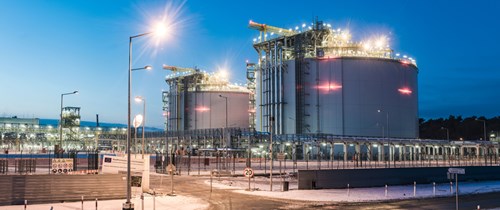
FIG. 1. Early collaboration with an automation solutions provider generates success with modern LNG projects.
Early engagement matters. Collaboration with an automation solutions provider typically adds value well before engineering, procurement and construction (EPC) work begins. Expert automation companies offer more than just equipment because they have amassed decades of LNG automation experience. When a project team engages early, investors and end users can establish a design basis informed by those decades of expertise.
In addition, the most advanced automation providers offer a portfolio that ranges across various sensors, controls, safety, reliability, optimization and digital technologies. This expansive domain expertise helps teams develop holistic solutions that will lay a stronger foundation for project success.
The most effective strategy is to follow a two-pronged approach. First, the automation solutions provider engages with investors and end users to determine which elements of their portfolio will bring value in deploying the right technology for the right purpose in the right application. Then, as the project team moves into detailed engineering design to develop a final investment decision (FID) process, the automation partner provides knowledge and expertise as a critical supplement to help EPC contractors design the most optimal paths for the project. Ultimately, following this model, early technical clarity reduces late-stage changes, redesign and integration risk.
New project models mean new complexity. The shift in primary project initiator is not the only change reshaping LNG project execution: modular LNG execution is also increasing the need for standardization, global coordination and architectural foresight.
Twenty years ago, LNG plants were built using large, single train methodologies, with 5 MMtpy–8 MMtpy capacity trains being the norm across projects. In contrast, many of today’s projects focus on delivering smaller trains, emphasizing modularization to improve schedule, agility and global sourcing. Modules are typically fabricated in multiple world regions and then shipped to the site, installed and connected to each other.
A modular strategy offers many benefits, but it also demands a global footprint, consistent standards and strong integration across many suppliers. Automation solution providers with global presence and standardized approaches help ensure these deliverables to reduce execution risk.
A clear path toward autonomous LNG operations. In addition to the complexities inherent in delivering a project on time, LNG project teams are also preparing for future operations in an environment of skilled workforce shortages. Companies are increasingly focused on preparing for autonomous and semi-autonomous operation in their facilities, which adds another layer of complexity to project design.
This challenge can be met by focusing on the three foundational pillars of autonomous readiness:
- Future-proofed architecture
- A transformative technology stack
- Efficient and effective project execution.
Future-proofed architecture. Historically, LNG automation architectures have been assembled late in the project lifecycle. Individual components were often treated as commodities and stitched together through complex, fragile, custom engineering. Such a process has increased complexity both during the project and across the lifecycle of equipment and software, and it has increased the amount of manual intervention required in both the project and ongoing operations.
As sensing technology and control solutions have evolved, the issues with legacy architectures have been exacerbated. Fragmented systems became data silos with limited visibility, and disparate applications were difficult to fully integrate under schedule pressure. Often, major challenges would arise during commissioning and startup, delaying the race toward mechanical completion and first gas.
Today, next-generation automation architectures help teams navigate these challenges and prepare for easier lifecycle support. To capitalize on these architectures, project teams must design for autonomy from day one. Autonomous LNG operations are built on a future-proofed architecture—one that moves beyond assembling disparate technologies and instead establishes a holistic enterprise operations platform (EOP). Such an EOP delivers a seamlessly integrated technology stack, where data flows freely from the intelligent field, through the industrial edge and into the cloud (FIG. 2).
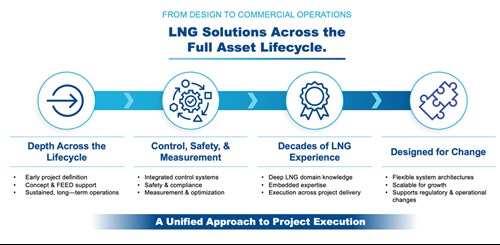
FIG. 2. Next-generation automation helps LNG teams build solutions that span the entire asset lifecycle.
In an EOP, end-to-end integration is unlocked across sensors, final control elements, control systems, safety systems, reliability solutions, advanced process control and enterprise operations via a common, unified data fabric to provide seamless and secure data mobility. Intuitive, standardized software in the EOP also unlocks more integrated workflows to break down the silos among safety, reliability, control and optimization to more easily achieve operational excellence.
By working with an automation solution provider early to develop an EOP-centric architecture, teams can eliminate many of the most common risks that limit project success.
For example, technologies such as smart commissioning—which centralizes and automates instrumentation commissioning tasks across distributed control systems and safety instrumented systems—bring tremendous value to traditional projects, but even more so for the modular design being adapted for many current and future LNG projects. These types of tools leverage the unified data fabric and open protocols of an EOP to remove uncertainty and dramatically improve project schedules.
Many teams also leverage the seamless integration of EOP systems to effortlessly transition static first-principles simulation models into dynamic simulation models for training, testing and optimization. These models can be used before startup to debottleneck operations, potentially achieving “an extra ship” in the first year, representing millions of dollars in benefit.
A transformative technology stack. Autonomous operations will be accomplished through integration, not unconnected components. Modern, autonomous operations depend on a broad, secure and software-defined technology stack. No single technology enables autonomy or even semi-autonomy; autonomy instead emerges from the way sensing, intelligence, control and optimization layers work together across the plant and enterprise.
An autonomous-ready technology stack is a comprehensive, standardized technology ecosystem spanning instrumentation, control, safety, advanced control, reliability and enterprise software. It is built upon software-defined systems that allow continuous evolution, all without costly hardware refreshes or the rip-and-replace of existing infrastructure.
Built on open, agnostic architectures leveraging standards such as open platform communications unified architecture (OPC UA) and message queuing telemetry transport (MQTT) to ensure flexibility and interoperability, a technology stack built on an EOP vision provides artificial intelligence (AI) enablement at every level of operation, from advisory systems and embedded intelligence to enterprise-level optimization. Most importantly, all systems are secure by design from the top of the stack to the bottom, protecting operational integrity and providing secure data accessibility.
Building the right technology stack matters. LNG operators increasingly require solutions that can address today’s operational challenges while enabling long-term autonomy. Fragmented solutions introduce friction, slow innovation and limit the ability to scale AI-driven capabilities. In contrast, an EOP-driven, autonomy-focused technology stack goes beyond visibility and insights by acting on contextualized, first-principles models to continuously optimize energy use, reliability and throughput, driving sustainable production outcomes.
Effective project execution. A next-generation architecture and strong technology stack are critical to delivering the “one more ship” that LNG operations strive for, but bringing those elements together for lifecycle success requires disciplined, end-to-end project execution. For LNG projects, effective execution translates autonomous readiness from concept to reality (FIG. 3).
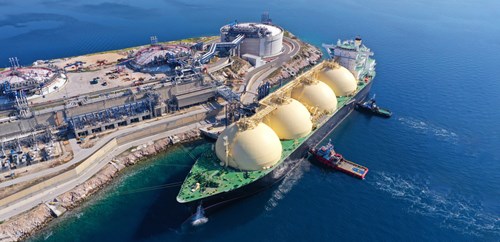
FIG. 3. Next-generation automation is a critical differentiator in LNG, helping companies deliver "one more ship" by capitalizing on efficiency.
Effective execution starts with early engagement across front-end engineering and design (FEED), detailed design and procurement. To accomplish this, many LNG organizations need proven global project partnering across their entire portfolio. They also need well-established global execution centers to provide industry excellence and integrated processes, as well as worldwide sourcing options to facilitate modern global execution.
An expert partner can help an organization determine best-fit contracting models and optimize project execution, from full-service to self-performance. The most advanced solution providers will integrate proven processes, tools and templates built on decades of industry experience, and they will have deep domain knowledge and expertise in meeting regulatory requirements and compliance for LNG operations.
Another key advantage of having an expert automation solutions provider guiding project execution from the earliest stages is single partner accountability. Having one key contact and coordination source directly reduces risk, complexity and execution friction by eliminating fragmented ownership, accelerating decision-making and improving agility.
Early engagement in action. For one large LNG producer, early engagement with an automation solutions providera facilitated the embedding of expert engineering resources from the provider in project teams. As the teams moved from FEED to detailed design and FID, they had all the resources they needed, with more than two-thirds of their design criteria completed because of the embedded resources and standardization of equipment. Ultimately, the team estimated the reduced engineering hours and schedule time allowed them to shave 3 mos–4 mos from a traditional project timeline.
Another LNG project saw the automation solution providera develop a custom engineering toolkit, utilizing remote virtual office, project data link and LNG workcell tools. Those tools dramatically reduced resource needs and engineering hours. The project team estimates that early engagement saved at least 8%–10% of engineering hours.
Tomorrow’s LNG success starts with today’s decisions. Evolution in the LNG industry requires new thinking about project and technology strategies. With increasing global competition, expansive workforce shortages and continual market fluctuation, early engagement, future-proofed architecture and an EOP approach to design are no longer optional.
Investors, EPCs and end users all benefit when automation expertise is embedded in the earliest stages of an LNG project. Facilities built this way start faster, operate smarter and are ready for a more autonomous future. Today’s thoughtful decisions can define success for decades to come.
NOTE
a Emerson
LITERATURE CITED
1 International Energy Agency (IEA), “Coming surge in LNG production is set to reshape global gas markets,” October 27, 2025, online: https://www.iea.org/news/coming-surge-in-lng-production-is-set-to-reshape-global-gas-markets
ABOUT THE AUTHOR
Arif Mustafa is the Vice President, Global Projects Pursuit at Emerson. He has > 30 yrs of experience in the automation industry. In his current role, Mustafa manages a global team of industry professionals who engage and bring value to investments in the energy, chemicals, LNG, metals and mining spaces. Mustafa has held a variety of leadership positions for Emerson in the Middle East and North America. He spent a few years as Vice President and General Manager for Emerson in the Middle East and witnessed the LNG wave in Qatar in its formative years of development and buildout. He continues to be engaged with the current LNG/FLNG investment wave in North America.


Comments