

Digital Exclusive: Successfully operating in a cold, cruel world
The standard operating conditions of an air separation plant, liquified natural gas (LNG) facility or hydrogen liquefaction unit are quite unlike most other processes. Typical operating temperatures of -300°F (-184°C) down to -450°F (-268°C) require a complete change in body design, materials of construction, and overall body style to suit these particularly difficult applications. This article discusses the key features necessary for successful control valve operation in these extreme environments.
Cryogenic applications. Cryogenic processes, such as those in air separation plants and LNG units, are a fascinating example of an industry pushed to the very limits of material capability. Leveraging thermodynamic chemical properties and tremendous amounts of energy, these processes gradually cool air, hydrogen and hydrocarbon gases down to ultra-low temperatures—as cold as -423°F (-253°C) for liquid hydrogen. At such low temperatures, air turns to liquid and can be separated using various distillation processes to create pure nitrogen, oxygen, argon and other component gases. Cryogenic processes are also used to liquify natural gas and hydrogen, making them much easier to transport.
A key operating parameter of these plants is energy management and efficiency. It takes a tremendous amount of electrical power to drive these processes. Once the process gas has reached extremely low operating temperatures, every effort is made to keep ambient heat from creeping back in. As a result, most cryogenic units utilize cold boxes (FIG. 1).
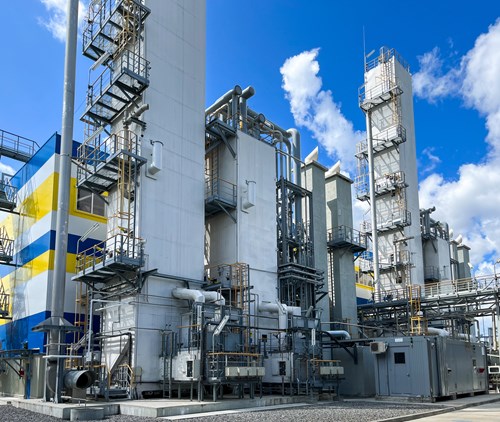
FIG. 1. Cold boxes are common in facilities operating at cryogenic temperatures. The box encloses whole vessels and associated piping, providing several feet of insulation to minimize heat transfer from the environment to the process.
Given the extremely low operating temperatures of the process vessels and piping, it would be virtually impossible to insulate them well enough to avoid heat transfer from the environment using standard insulating techniques. To address this problem, a box is built around whole vessels and associated piping, and it is then filled with insulating material.
The cold box effectively creates an insulating layer that is a few feet thick, keeping heat encroachment to an absolute minimum. While the cold box works well for the vessels, it creates a challenge for control valves mounted in the piping systems inside these enclosures.
The solution to this problem requires a redesign of the control valve body to allow the valve to be installed within the cold box, while placing the valve actuator and controls outside where they can be accessed and serviced (FIG. 2). This is why valves for cryogenic cold box applications usually have extremely long body extensions.
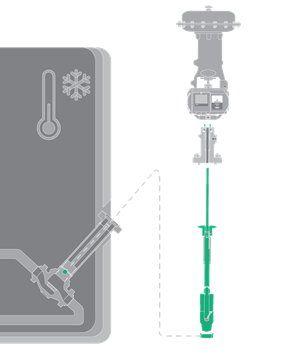
FIG. 2. Cryogenic valves are typically mounted inside the cold box but have an elongated body, allowing the valve actuator and trim to be serviced from outside.
However, there is much more to designing a cryogenic control valve beyond giving it an extended body style.
Cryogenic control valve design features. There are a number of key design features that can have a dramatic impact on a cryogenic control valve’s lifecycle cost, as well as the efficiency and performance of the plant. These include:
- Energy efficiency: The valve’s design features and packing should minimize product loss and heat transfer from the ambient environment to help reduce energy load of the facility and increase operating profitability.
- Performance: The valve itself must be capable of handling the cavitation and off gassing conditions typically encountered in these processes, while providing extremely tight shutoff, despite the very low process temperatures.
- Longevity: Since access is somewhat limited, the valve and packing should provide long service life and require little if any maintenance.
- Maintainability: If service is required, nearly all valve repairs and trim component replacement should be possible without entering the cold box.
Each of these features and the key control valve design parameters associated with them will be discussed in the following sections.
Ensuring energy efficiency. After consuming a tremendous amount of electrical power to cool and separate process gases, it is extraordinarily counter-productive to allow either the product gases to escape or ambient heat to seep into the process. Cryogenic valves should therefore be designed to minimize both product loss and heat transfer.
Product loss is avoided by using specially engineered, live-loaded packing incorporating materials suited for these applications. Leakage rates of 100 parts per million or less should be targeted. Heat transfer from the environment can be minimized using a number of special body design features (FIG. 3). These include a narrow body diameter to reduce heat conduction, as well as fluid baffles built into the body.
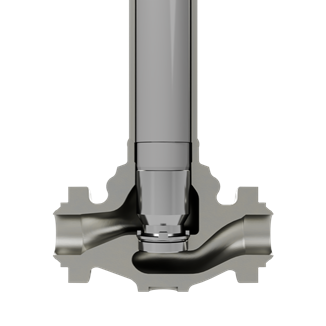
FIG. 3. Heat transfer from outside the cold box is minimized by using a narrow body and fluid body baffles to displace process fluids and avoid circulation within the body cavity.
The fluid baffle and displacer fill the volume of the neck extension so there is less process material in the extension tube. This prevents fluid circulation and effectively insulates the process from the upper body components.
Providing performance and longevity. A cryogenic control valve must perform at the highest levels and maintain that capability for an extended time due to the relative inaccessibility of the valve body. The valves will usually employ an unbalanced, single port globe or angle valve for reliable cryogenic sealing. Internal trim should be crafted of hardened alloys to withstand cavitation and off gassing, both common in cryogenic processes. Different applications will require a variety of body sizes in both linear and equal percentage trim styles. Tight shutoff via metal-to-metal seats provide Class IV, V or VI shutoff.
Valve shutoff classes (ANSI/FCI 70-2) define the maximum allowable leakage rates for control valves, ranging from Class I (no test) to Class VI (bubble-tight).
Both the body and packing should maintain an elevated level of performance over an extended service life. Hardened alloy trim and live loaded environmental packing help in this regard, minimizing erosion and trim damage, while maintaining extremely low levels of leakage despite continuous operation.
Easing maintenance and serviceability. Eventually every valve will wear and require some maintenance. Top tier cryogenic valves incorporate a variety of key features that allow nearly all the maintenance to be performed from outside the cold box (FIG. 4).
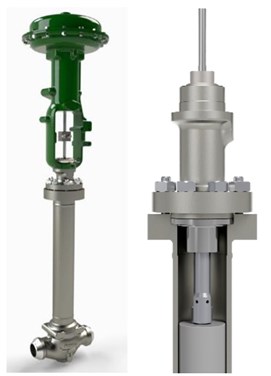
FIG. 4. High-performance cryogenic control valves utilize a top entry design, allowing independent replacement of valve trim or bellows from outside the cold box. The valve packing can be quickly and evenly adjusted using a single adjustment nut.
The packing can be adjusted using a single packing nut to evenly distribute pressure across the whole packing system to avoid damage and support long life and very low rates of product loss. The body style employs a single stem assembly and top entry design, allowing replacement of the stem, bellows, plug, and seat ring without accessing the valve body. These features provide for full maintenance while the valve remains enclosed within the cold box.
Carefully evaluate the options. When considering alternatives for cryogenic control valve applications, it is important to look for key features in body design. Obviously, the valve itself must perform well and provide smooth control and tight shutoff over a prolonged service life. Just as importantly, the body style should minimize heat transfer by utilizing a narrow extension diameter and fluid baffles and displacers to limit heat conduction from the environment. Finally, the valve body should be designed to facilitate maintenance and trim component replacement via top access.
Selecting the right valves for cryogenic service can create significant improvement in facility profitability, process reliability, and life cycle maintenance costs. Therefore, end users are encouraged to take the time to fully evaluate the alternatives and understand the offerings of each automation service provider. A wise selection can have a beneficial effect on your plant’s bottom line, but a bad choice may leave you out in the cold.
About the Authors

Brendan Leslie serves as a product marketing manager at Emerson, where he leads new product development initiatives to advance innovative technologies. He holds a Bachelor of Science in Mechanical Engineering from Missouri University of Science and Technology, and he is currently pursuing a master’s degree in energy systems engineering from Iowa State University.

Leela Rajana is a global product manager at Emerson, focusing on delivering solutions to advance process automation across industries to bridge the gap between complex engineering challenges and customer needs. She holds a master’s degree in engineering from Iowa State University.
Related News
Related News

- Cheniere signs deal with Bechtel to expand U.S. LNG export capacity
- U.S. natgas prices hit 20-week high on LNG flows, heat outlook
- Baker Hughes’ fuel flexible NovaLT™ 16 gas turbine certified by RINA for marine propulsion
- Commonwealth LNG FID attracts global syndicate of leading banks
- U.S. natgas futures rise as hotter weather boosts demand, some spot prices negative

Comments