

China's LNG imports set to recover in 2026 though not to 2024 level
China's liquefied natural gas imports are set to rise in 2026 as a global supply upswing lowers prices while use for power generation and transport rises, though any lift will be modest due to persistent weakness in the domestic economy, analysts said.
The world's largest LNG importer is set to buy 3% to 10% more of the super-chilled fuel this year versus last, or roughly 70.5 MM tonnes–75.5 MM tonnes, according to analysts at five firms.
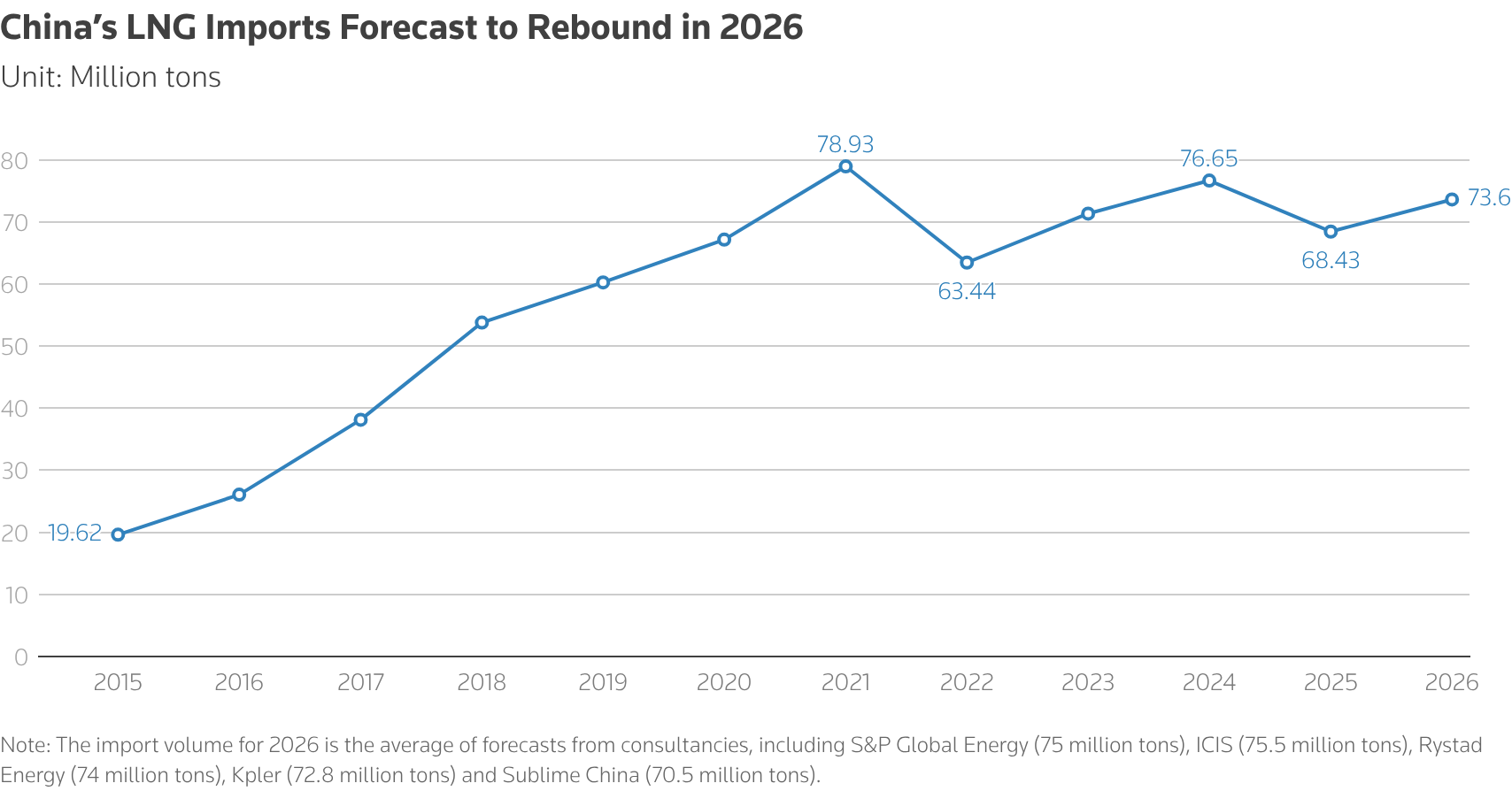
But even the most optimistic forecasts are still below 2024 levels following a rare 10% decline in imports last year due to a mild winter and weak industrial demand. It was the only time imports fell over the past decade outside the pandemic.
This year, however, gas demand is set to recover somewhat, with analysts at Sublime China Information (SCI) expecting the rising use of LNG trucks alone to boost demand by 3.6 million tons.
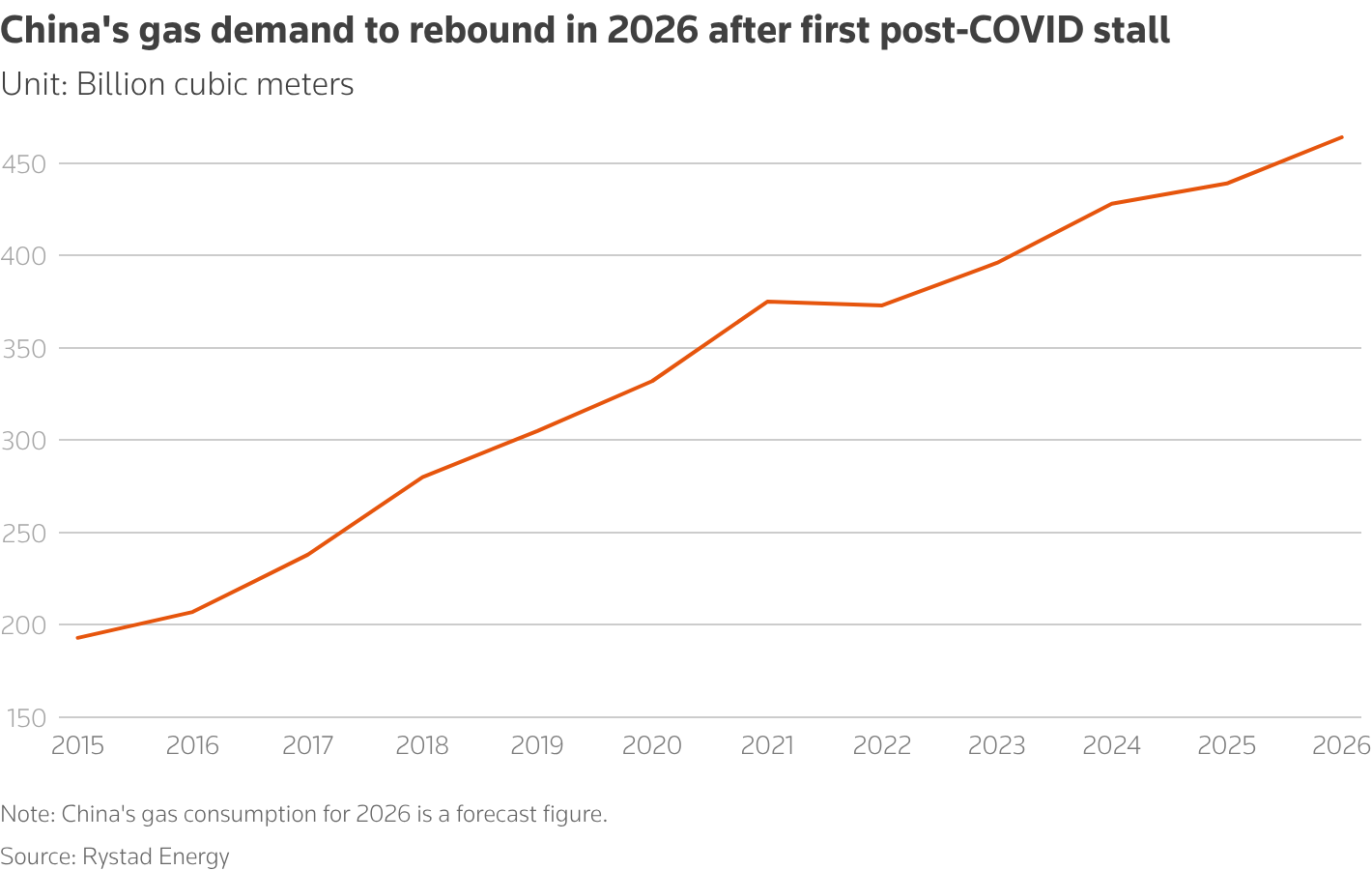
LNG typically competes with cheaper gas produced domestically or piped from Russia. However, the rise in demand is unlikely to be filled completely by either source.
Consultancy Rystad Energy estimated domestic gas production will grow about 12 Bm3 this year, versus a 25 Bm3 bump in demand.
Meanwhile, gas pipelines from Russia are already near capacity.
At the same time, the growing quantity of LNG coming online globally is set to depress prices, with S&P Global Energy, Kpler and Rystad Energy forecasting at least 35 MMt of new capacity this year.
S&P Global Energy expects Asian spot LNG prices to average $9 to $9.50 per million British thermal units, while ICIS forecasts prices falling below $9/MMBtu in the second half of 2026. Prices averaged above $12/MMBtu last year.
A weak economy. While lower prices are positive for demand, questions remain about whether they will fall far enough to stimulate big purchases when faced with cheaper alternatives.
"Even if prices fall in 2026, LNG still can't compete with domestic or imported pipeline gas, which has a cost advantage, so it remains a supplemental fuel," said analyst Xiong Wei at Rystad.
Also missing from the picture, analysts said, is a big uptick in gas demand from the industrial sector, a major user, due to the persistent drag on the economy from a property market five years into a crisis with no end in sight.
"With industrial demand remaining relatively weak, how much additional demand a lower price can actually stimulate remains debatable," said analyst Yuanda Wang at consultancy ICIS.
Related News
Related News

- Mitsubishi Heavy Industries Compressor acquires Swiss rotating equipment maintenance company AST Turbo AG
- RWE strengthens partnerships with ADNOC and Masdar to enhance energy security in Germany and Europe
- TotalEnergies and Mozambique announce the full restart of the $20-B Mozambique LNG project
- Cook Inlet LNG advances FSRU project in Alaska (U.S.)
- Qatar’s Ras Laffan LNG hub hit by missile attack, ‘extensive damage’ reported

Comments