

Global LNG supply set to jump in 2026, limiting prices and spurring demand
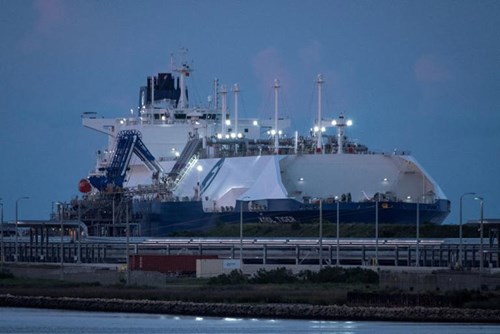
Global liquefied natural gas (LNG) output is set to jump this year, easing constraints seen since the 2022 Ukraine war and dampening prices, which could spur demand including from top importers China and India, analysts say.
This year marks the start of a large wave of supply that analysts expect to last until 2029, depressing prices that could drive more demand from emerging economies.
"2026 is expected to be a transitional year for the LNG market," said Kpler. "The market is expected to move away from tightness toward ample availability, with sufficient supply even as winter demand and storage needs emerge, particularly in Europe."
Supply. Estimates from S&P Global Energy, Kpler and Rystad Energy forecast at least 35 MM tonnes (t) of new capacity coming online this year, primarily from the U.S. and Qatar.
This could lift global LNG supplies by up to 10% year-on-year, with 2026 supply forecasts from Kpler, Rystad, ICIS and Rabobank in a range of 460 MMt–484 MMt.
Projects like Golden Pass LNG on the U.S. Gulf Coast and Qatar's North Field expansion are expected to contribute sizable volumes, while output is set to ramp up from Corpus Christi and Plaquemines LNG in the U.S., LNG Canada and the Greater Tortue Ahmeyim projects offshore Senegal and Mauritania.
The additional supply will pressure global prices, with analysts from Rabbobank, Rystad and Kpler predicting a range of averages for Asian spot LNG from $9.50 to $9.90 per million British thermal units (MMBtu) in 2026, down from an average of $12.45 in 2025.
Rystad and Kpler gave forecasts for gas prices at the Title Transfer Facility in the Netherlands, the European benchmark, to average in a range of $9.50 to $9.74 per MMBtu this year, down from an average of $14.20 in 2025.
With Asia LNG and European gas prices easing, price spreads to U.S. benchmark Henry Hub will narrow, squeezing U.S. LNG export margins at a time when feedgas costs are rising, said analysts at Vortexa, Rabobank and S&P Global Energy.
China, India to drive demand. Asia's LNG demand, which slipped in 2025 on price sensitivity and competition from alternative fuels, is forecast to recover by 4%–7% this year led by China and India as lower prices spur additional spot purchasing, fuel switching and stockpiling, according to a range of outlooks from Rystad, Kpler and S&P Global Energy.
New contracts will also add to rising imports, with Chinese demand expected to rise by 6 MMt–7 MMt and Indian demand by 5 MMt, said Kpler analyst Nelson Xiong.
"Much of the new contracted supply should be absorbed domestically," he said.
China's 2025 imports slumped amid weak industrial demand, U.S. tariffs, and strong domestic and piped gas supply. Demand this year is set to rise but may still fall short of 2024 levels, said Rystad Energy analyst Ole Dramdal, forecasting imports at 76.5 MMt this year, up 12% from 2025, as Beijing prioritizes domestic production.
However, a substantial surplus of China's contracted volume will likely be remarketed as the country's long-term LNG contracts are expected to reach above 80 MMtpy, Dramdal added, while Turkey, Malaysia and Taiwan will see their combined imports rise by 6.2 MMt in 2026.
Europe absorbs supply. Europe became a driver for global LNG demand after it cut Russian supply following Moscow's full-scale invasion of Ukraine.
Kpler sees Europe's 2026 LNG imports rising by 22 MMt while Rystad forecasts an increase of 20 MMt and Energy Aspects and ICIS see gains of around 13 MMt. This is driven by higher storage injection needs after lower end-of-winter inventories, higher domestic gas consumption amid softer average TTF prices, growing Turkish demand, and its role as a balancing market for rising Atlantic basin supply.
"Europe has been poised to absorb a large share of the new LNG supply, showing the strongest near-term incremental demand," said Rystad's Dramdal.
Europe will begin phasing out Russian piped gas and LNG this year, with analysts expecting LNG cargoes from the Yamal project to find alternative destinations like Turkey and Egypt, while Europe backfills the displaced volumes with Atlantic basin supply.
Related News
Related News

- Mitsubishi Heavy Industries Compressor acquires Swiss rotating equipment maintenance company AST Turbo AG
- RWE strengthens partnerships with ADNOC and Masdar to enhance energy security in Germany and Europe
- TotalEnergies and Mozambique announce the full restart of the $20-B Mozambique LNG project
- Cook Inlet LNG advances FSRU project in Alaska (U.S.)
- Qatar’s Ras Laffan LNG hub hit by missile attack, ‘extensive damage’ reported

Comments